To many people, robotics engineering appears to be a “hardcore” field built on complex code and precision mechanics, seemingly accessible only to a select few with innate talent. At BASIS International School Hangzhou, however, that notion is being challenged.
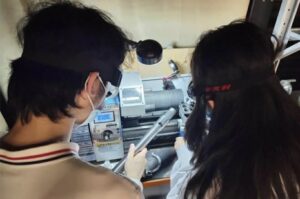
Through tiered task design and continuous mentor support, our robotics curriculum makes mechatronics attainable for all. From 3D modeling and circuit soldering to the modular development and integration of robotic subsystems, students create engineering projects uniquely their own in the Makerspace, while honing the perseverance and courage essential for bringing ideas to life through repeated experimentation and problem-solving.
Solid Curriculum Design in Middle and High School STEM Classes
THE ADVANCED ROBOTICS ENGINEERING APPLICATIONS CLASS

The Advanced Robotics Engineering Applications Class at our school offers an engaging, hands-on foundation for students interested in exploring the exciting world of robotics and engineering. Learners may choose between two distinct paths: a traditional, teacher-guided curriculum or the freedom to chart their own course through an individual project route
The Teacher-Guided Path
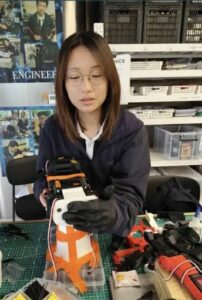
 The teacher-guided path is modeled after Cornell University’s Mechatronics Engineering course MAE 3780, providing students with a robust and university-level framework. From the outset, students dive into basic circuitry and soldering skills, learning core electronics principles such as circuit design and microcontroller programming.

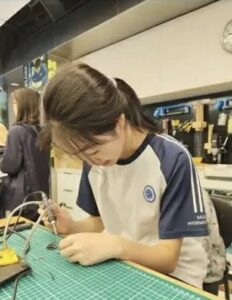
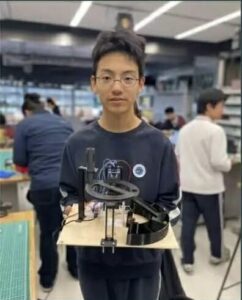
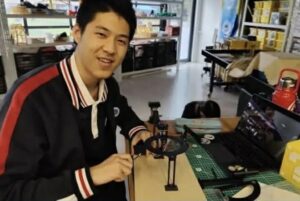


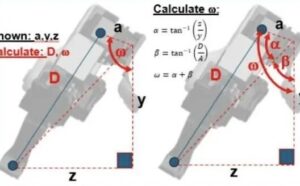
As the course progresses into medium-advanced territory, students deepen their understanding by examining the interplay between robotic subsystems—sensors, actuators, and controllers—and how they integrate to achieve complex functionalities. Projects like a robotic controlling hand offer practical insight into how programming and hardware combine to create lifelike movement.
The Independent Project Route
For those with unique ideas, the individual project route allows creative independence. Here, students must submit a detailed project proposal and timeline for approval, taking personal responsibility for every phase—from concept and design to execution.

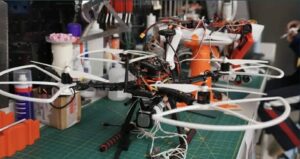
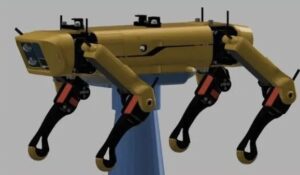
Notable examples include the “Autonomous Drone Delivery Design” and “Intelligent Robotic Dog,” both of which showcase students’ capacity to take an idea from inception through to a fully engineered solution.

Preparing Future Innovators
Ultimately, the Robotics Engineering Applications Class aims to nurture innovative thinkers capable of designing, building, and delivering complex robotics projects, equipping students with valuable skills for both academic pursuits and future careers in a technology-driven world.

MIDDLE SCHOOL PHYSICS ELECTIVE
DR. HUAJIE KE

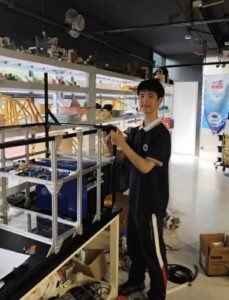
Apart from the Robotics course, the elective courses offered by the Middle and High School Science Department are all designed to expand students’ hands-on abilities and nurture scientific literacy beyond the core curriculum. These courses emphasize skills such as experimental design, construction of scientific apparatus, measurement and data analysis, as well as theoretical modeling and simulation—helping students apply scientific thinking to real-world challenges.

In the first project-based learning module of the newly launched Physics elective, Grade 8 students combined theoretical analysis with program-based simulation to optimize and iterate their designs for a catapult. Using 3D modeling and printing, students created prongs at different angles to precisely adjust the projectile’s launch trajectory-an engaging blend of creativity, precision, and applied physics.

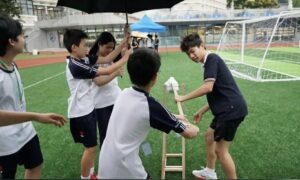
After completing measurements across various parameter settings, students analyzed the effects of air resistance on projectile motion using video analysis and theoretical simulation.
We believe that all these design experiments from scratch have ignited the students’ creative passion and will continually propel them further on their paths in science and engineering.
Conclusion: STEM Learning, Elevated Across Our Network
Across BASIS International & Bilingual Schools, courses like these reflect our commitment to making rigorous STEM learning inspiring, hands-on, and accessible to every student. Whether they follow a guided pathway or design an independent project, learners gain the confidence to think creatively, problem-solve boldly, and bring ambitious ideas to life.

By empowering students to explore, build, test, and innovate, we prepare them not only for future academic success in a STEM field but for meaningful contributions in a technology-driven world—one engineered project at a time.
For more information on teaching with BASIS International Schools, visit our careers website.
