Advanced coursework at BASIS International & Bilingual Schools • China is defined by curiosity, challenge, and the satisfaction that comes from engaging with complex ideas. Our students’ exceptional AP results—in 2025, a 96.7% pass rate, an average score of 4.45, and 98.7% of graduates recognized as AP Scholars—speak to the culture of learning our teachers contribute to every day.
Starting the moment students step into their first AP course in grade 9, they are supported by teachers who set high expectations and show genuine care, helping them push past what they thought they could do academically and personally. Teachers lead with expertise and imagination, using well-established, intentionally applied practices to invite students to deeply explore content and connect to their own experiences.
From economics simulations that bring scarcity and opportunity costs to life and a biology experiment that turns bubble-counting into insights about reproduction strategies, to a computer science project that re-publishes games on the internet and a history project that connects global trade to students’ favorite Chinese dishes—our AP classrooms are engaging learning spaces.
Below, four AP teachers from across BASIS International & Bilingual Schools describe how they create this kind of learning and how their classroom choices shape the extraordinary outcomes our students achieve.
Structured Knowledge and Collaborative Application in AP Economics
Walk into my AP Economics classes, and you might not see a traditional lecture. Instead, you might see students negotiating trades in our Production Possibilities Frontier (PPF) simulation, discovering and identifying how the concepts of scarcity and opportunity cost lead to higher production & consumption possibilities. Or you might also hear the buzz of collaboration as partners dissect a complex Free Response Question (FRQ), debating the precise graphical shift for a change in consumer tastes. All this energy is intentional.
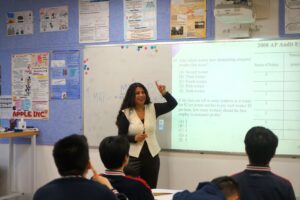
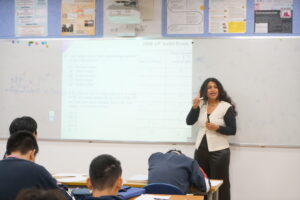
Our learning begins with and is concluded by a daily ritual that students love! For the first and last five minutes of class, we do rapid-response multiple-choice questions. Students signal their answers on their fingers, creating a quick, low-stakes competition that instantly energizes the room. The real magic happens when they immediately turn to a partner to explain their reasoning. This simple act of having to articulate the why behind an answer transforms passive recalling from the previous day into cemented knowledge that is ready to be built upon at the start of the class or a key take-away at the end of the class.
In a subject that is often perceived as a dry set of models, active engagement and deep understanding while preparing for the exam is the key that unlocks profound interest in the students. At regular intervals, my students work in small groups to create mind maps, weaving together connections established from different units and concepts. It’s drawing these connecting lines that help them truly see how microeconomics and macroeconomics operate as interconnected systems.


My goal is to ensure that when my students walk into their AP exam, they aren’t just recalling formulas. They’re recalling the experience of a trade, a debate with a peer, or a concept connection map they built together. This way, they’re not just prepared for a test, but are also equipped with a dynamic, usable understanding of how the world works. This blend of structured knowledge and collaborative application arms my students with more than just formulas. And my reward is seeing them carry this confidence that comes from having taught, challenged, and learned from each other every step of the way.

Shilpa Baweja
AP Economics & Post-AP Business courses Teacher
BASIS International School Guangzhou
_________
The Joy of Teaching AP English Literature

The joy of teaching English literature is rooted in purpose for the teacher, and its fulfilment is in enabling students to find and reaffirm their purpose in their growth within their ordinary day-to-day life. As teachers, we seek moments of true insight that cement themselves as seeds, bursting through the concrete of grades and GPA’s into towering moments of reflection. In a world of educational trends and fads, it is always refreshing to remind ourselves that an engagement in the deep truths and foundations can result in a student’s personal transformation of purpose—and, by extension, our own realization of how our purpose is being fulfilled in the ordinariness of a teaching day.
English is such a subject it creates room for true Education. In AP literature, in maintaining and creating room for depth of conversation through a consistent atmosphere, and expecting students to engage in rigour and go beyond themselves, we see how purpose in a classroom can easily extend to life.
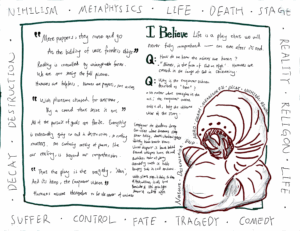
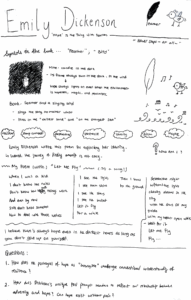

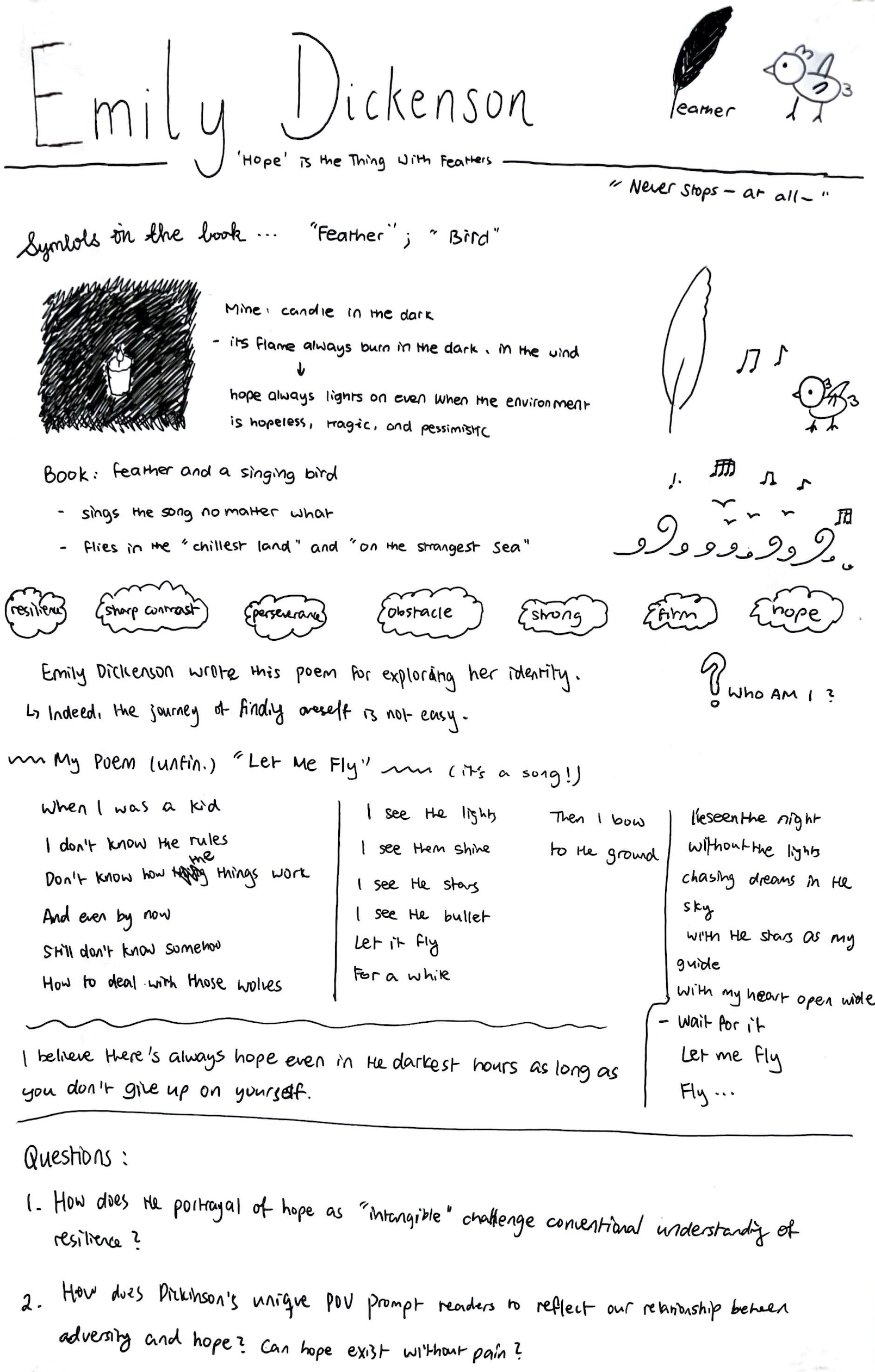

Two exceptional poetry One-Pagers were created by Chris W. and Jessica W.: uniquely and independently exploring a Poet’s lives, with depth and meaning. Starkly different, each One-Pager reflects how the individual student reflects on their own perspectives, life experiences and worries, and understanding. Yet both also accomplish the great goal of rigour in presenting academically sound arguments and high-level, sophisticated analysis.
And so here, we see how purpose is found in poetry; teaching comes alive. Branches bearing fruit; shade in the scorch of the heat. And, yes, as teachers, we often experience these joyous moments of ordinary purpose, and they give us the strength and resolve to keep beating on, born back ceaselessly into our teaching heritage of purposeful transformation.

Dr. Jonathan Alexander Smith
AP Literature Teacher
BASIS International School Nanjing
———
Exploring Science: From South Africa to Nanjing
Growing up in South Africa, I was fortunate to have nature right at my doorstep. From an early age, I witnessed biological processes firsthand and began asking important questions about how the natural world works. This curiosity stayed with me throughout my life, driving me into continued exploration of nature’s wonders.
Fast forward a few decades, and here I am today, teaching young minds the “wonder” of science in the BASIS International & Bilingual Schools network, focusing on Biology and Environmental Sciences. Both AP Biology and AP Environmental Sciences demand strong academic rigor, consistent engagement, and inquisitive minds. Mastery of these subjects requires a high level of understanding, but also the application of concepts.
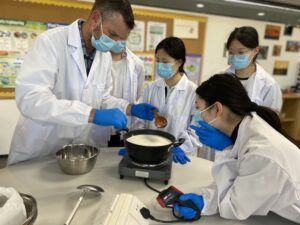
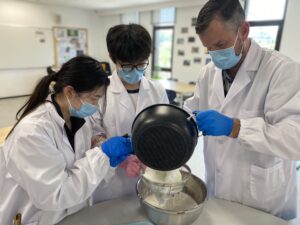
Though I’ve traded the great outdoors for the concrete jungle of Nanjing, my teaching approach remains the same: simplify concepts, make them practical, encourage hands-on learning, and foster open discussions, especially around challenging questions. When students engage actively by doing, talking, and questioning rather than just reading and listening, the transfer of skills and knowledge is faster and more effective.
Experiments are designed to build the skills needed for success in AP science, but they also play a crucial role in understanding complex processes and concepts. I ensure all my experiments provide hands-on experiences that trigger deeper thinking, encouraging students to question outcomes. A failed result doesn’t mean failure; it creates an opportunity for further investigation and deeper understanding.
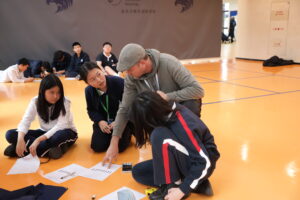
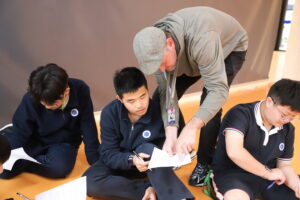
Creating an engaging classroom today means linking learning experiences to everyday scenarios familiar to students. Most of them do not have exposure to the outdoors, so activities like counting bubbles or keeping them “alive” can provide more impactful insights into reproduction strategies than explaining survival strategies through graphs or slides.
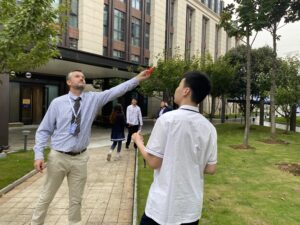
Ultimately, my goal is to instill a lifelong curiosity and passion for science in my students. Whether in the wilds of South Africa or the bustling city of Nanjing, the wonder of science remains the same, and I’m privileged to share that journey with the next generation of BASIS International School Nanjing students.

Evert de Ruiter
Grade 6 Biology Teacher
Director of Boarding and Residential Life
BASIS International School Nanjing
____
AP Computer Science Principles Project
A project of note that we are currently working on as part of a unit on networks combined with programming, in AP Computer Science Principles involves each student downloading a fully functional browser-based Mario game onto their laptops, via a GitHub, using Git commands in their VS code terminal.
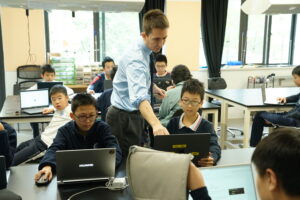
Students are then working on reskinning the game, via edits to the image, HTML and CSS files, granting the game a unique look and feel. For example, swapping Mario out for their own characters, enemies out for new ones. Etc.
Additionally, they are adding new functionality, such as double jump, increased character and NPC speed, etc., editing soundtracks
By the end of the project, the hope is that students will each have their own fully functional Mario game, which is unique to them.
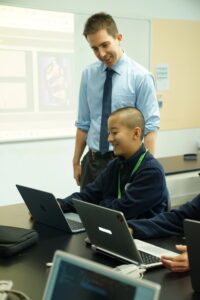
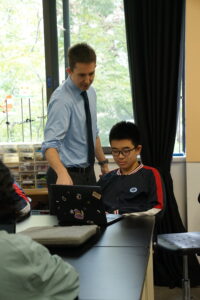
They will re-publish the game on the internet via GitHub, under MIT open license that the original comes with, that will then allow anyone around the world, including their classmates and families, to play their game.
They are learning about sharing on the internet, version control, programming, input, output, and a variety of other programming and impact of computing concepts simultaneously.

Benjamin Newton
Teacher of ICT and Computer Science
Chair of ICT and Computer Science
BASIS International School Hangzhou
Conclusion
Across our campuses, AP teachers bring rigor to life through creativity, expertise, and a deep belief in what students can achieve. Their classrooms show that advanced coursework isn’t just about mastering content, it’s about cultivating curiosity, confidence, and the ability to think with clarity and purpose. As these stories illustrate, the extraordinary outcomes at BASIS International & Bilingual Schools are built on thoughtful teaching, meaningful challenge, and learning experiences that stay with students long after the exam.
For more information about teaching abroad with BASIS International Schools, visit our careers website.
Explore open AP positions throughout the BASIS International & Bilingual Schools network here.
