My name is Cheryl Comrie, and I am an Early Years teacher from the U.K. with a particular interest in language development, independence, and play-based learning. I began my teaching career in China as a primary ESL teacher, then moved into Early Childhood Education. My experience spans both Montessori and mainstream settings, and since 2024, I have been part of the team at BASIS Bilingual Kindergarten Futian.
From ESL Teacher to Early Years Educator
Working internationally has given me the opportunity to learn from diverse cultures, educational systems, and teaching approaches. I was particularly drawn to working in China because it offered the chance to support children as they develop English while learning in a different cultural context.
Joining BASIS Bilingual Kindergarten Futian has allowed me to build on this experience in a bilingual Early Years environment. I enjoy working alongside teachers with different professional backgrounds and perspectives, which encourages me to reflect on my own practice and consider new approaches.
Discovering Montessori
I was first introduced to Montessori when I began working in a Montessori Early Childhood setting, and I was immediately drawn to its emphasis on respecting children as capable, developing individuals.
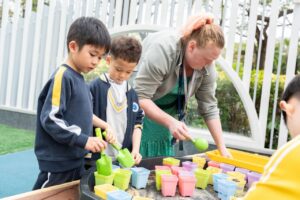
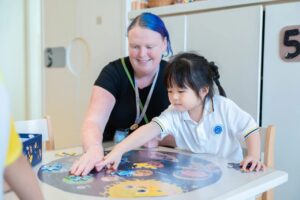
The focus on independence particularly shaped my teaching. Montessori encourages us to consider what children can do for themselves and how we can create an environment that allows them to practice those skills. Whether it is putting on a coat, preparing something, choosing an activity, or tidying their workspace, these everyday experiences can build confidence, coordination, responsibility, and problem-solving skills.
I also became very interested in the Montessori approach to observation. Rather than simply deciding what I want children to learn, I learned to observe their interests and development and use that information to guide what I offer them next.
Sharing Montessori Practices with Colleagues
I wanted to share Montessori practices with my colleagues because I don’t think Montessori has to be an “all or nothing” philosophy. Many of its principles can complement other Early Years approaches.
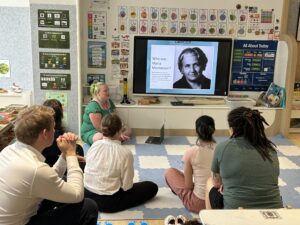
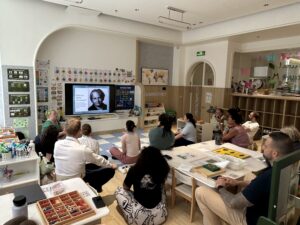
For example, ideas around independence, purposeful environments, hands-on learning, and self-directed exploration can be incorporated into many different curricula. Sharing some of the Montessori materials I have used throughout my career was an opportunity to demonstrate this and, more importantly, start a conversation with colleagues about how we might adapt similar ideas for our own classrooms.
Supporting Language Development in a Bilingual Classroom
In a bilingual classroom, children are often developing English at very different rates. Some may understand much more than they can currently express, while others may be beginning with individual words or short phrases.
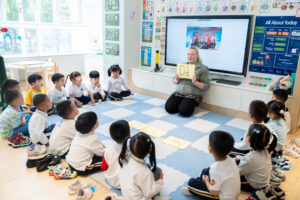
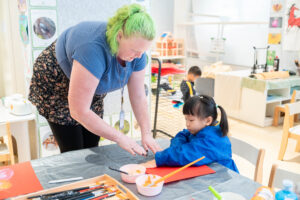
Montessori language materials can provide meaningful, hands-on ways to connect objects, pictures, sounds, and vocabulary. For example, a child might begin by matching a real object to a picture while hearing the English word. As their confidence grows, that vocabulary can expand into phrases and sentences.
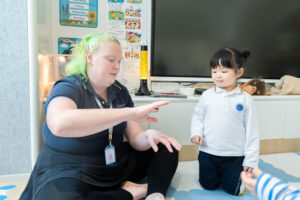
I also think language development should happen naturally throughout the day, not only during formal language activities. Children can develop English while building, cooking, sorting, caring for the environment, engaging in practical life activities, or participating in imaginative play. The concrete, meaningful experiences found in Montessori can provide a strong foundation for this.
Teaching Without a Mandated Philosophy
Working without a mandated philosophy encourages flexibility and reflection. My Montessori experience still influences my teaching, but I don’t try to turn my current classroom into a Montessori classroom. Instead, I consider which principles are useful for the children I am teaching and how they can complement our curriculum.
It also means teachers can learn from one another and evaluate different approaches based on their students’ needs.
The Value of Diverse Teaching Backgrounds
I think one of the greatest strengths of an international school is the range of experiences teachers bring. Someone who has worked in a Montessori environment may approach a situation differently from someone with experience in a British, American, or Chinese school system.
These differences give us opportunities to question our assumptions and discover new possibilities. We don’t have to agree on one particular approach to learn from each other.
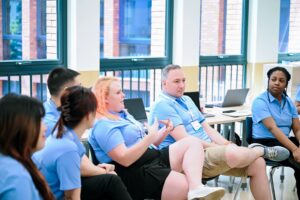
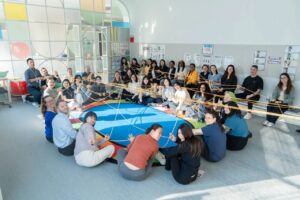
My own classroom today reflects this. I have carried forward Montessori ideas around independence, observation, and hands-on learning, while also incorporating ideas from colleagues around language support, play, classroom routines, and curriculum planning.
Ultimately, I think great teaching comes from being willing to keep learning. Every teacher brings something different to the table, and when we share those experiences, we can create richer learning opportunities for the children in our care.

Cheryl Comrie
Pre-K1 ECE Subject Expert Teacher
BASIS Bilingual Kindergarten Futian
For more information about teaching early childhood education with BASIS International Schools visit our careers website.
